A Certificate of Conformity is an official document confirming that a product has met the required standards of the importing country.
As international trade continues to expand, governments around the world are placing greater emphasis on ensuring that imported goods meet national safety, health and quality standards. One of the most effective tools used to achieve this objective is the Conformity Assessment Programme (CAP).
Many countries across Africa, Asia and the Middle East have introduced these programmes to protect consumers, support fair trade and prevent the importation of counterfeit, unsafe or substandard products.
What is a Conformity Assessment Programme?
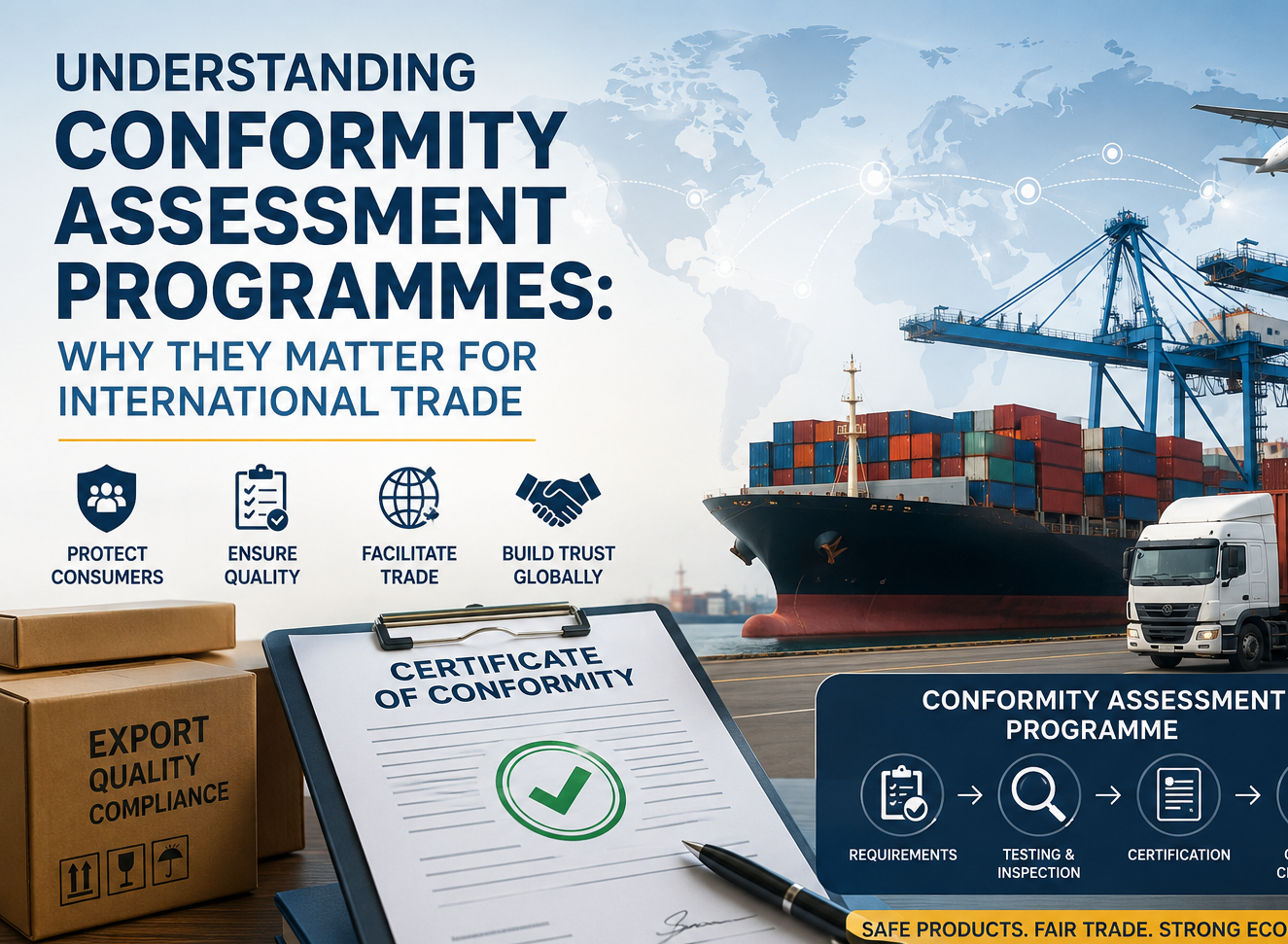
A Conformity Assessment Programme is a government-approved system that verifies whether products being exported to a particular country comply with that country's technical regulations, standards and quality requirements before they are shipped.
The programme helps ensure that products entering a country are safe for consumers, fit for purpose and compliant with national regulations.
Depending on the destination country, exporters may be required to undergo product inspection, laboratory testing, document verification or factory audits before receiving approval.
What is a Certificate of Conformity?
One of the key outcomes of a Conformity Assessment Programme is the issuance of a Certificate of Conformity (CoC).
A Certificate of Conformity is an official document confirming that a product has met the required standards of the importing country.
The certificate is usually presented to Customs authorities during import clearance and helps facilitate faster processing at ports of entry.
Without a valid Certificate of Conformity, shipments may be delayed, subjected to additional inspections, incur penalties or even be rejected.
Why Do Governments Implement Conformity Assessment Programmes?
Governments adopt these programmes for several important reasons:
Protect consumers from unsafe and substandard products.
Improve public health and environmental protection.
Reduce counterfeit and fake imports.
Promote fair competition for compliant businesses.
Improve customs efficiency and reduce clearance delays.
Strengthen confidence in imported goods.
These programmes also support national industrial development by ensuring imported products meet the same quality expectations as locally manufactured goods.
Products Commonly Covered
Although requirements vary by country, Conformity Assessment Programmes often apply to products such as:
Used motor vehicles
Electrical and electronic equipment
Building and construction materials
Industrial machinery
Chemicals
Food-contact materials
Toys
Household appliances
Personal protective equipment (PPE)
Automotive parts
Some countries continually expand their list of regulated products as new safety standards are introduced.
Benefits for Exporters and Importers
Businesses that comply with conformity assessment requirements enjoy several advantages, including:
Faster customs clearance.
Reduced risk of shipment rejection.
Lower storage and demurrage costs at ports.
Improved customer confidence.
Greater access to regulated international markets.
Better compliance with international trade requirements.
For importers, purchasing products that have already undergone conformity assessment provides greater assurance of quality and regulatory compliance.
Conformity Assessment in Africa
Many countries in East and West Africa have introduced Conformity Assessment Programmes as part of efforts to strengthen product quality, consumer protection and trade facilitation.
As intra-African trade grows under the African Continental Free Trade Area (AfCFTA), conformity assessment is expected to play an increasingly important role in harmonising standards and making cross-border trade more efficient.
Looking Ahead
Conformity Assessment Programmes are becoming an essential part of international commerce. They not only protect consumers but also create a more transparent and predictable trading environment for exporters, importers and customs authorities.
For businesses involved in international trade, understanding conformity assessment requirements is no longer optional—it is a critical component of successful market access and regulatory compliance.
 Export, Trade & Logistics