 National News
National News
Jul 08, 2026
434 Reads
President Mahama Assents to 24-Hour Economy Authority Bill, Paving the Way for Ghana's Next Phase of Economic Transformation
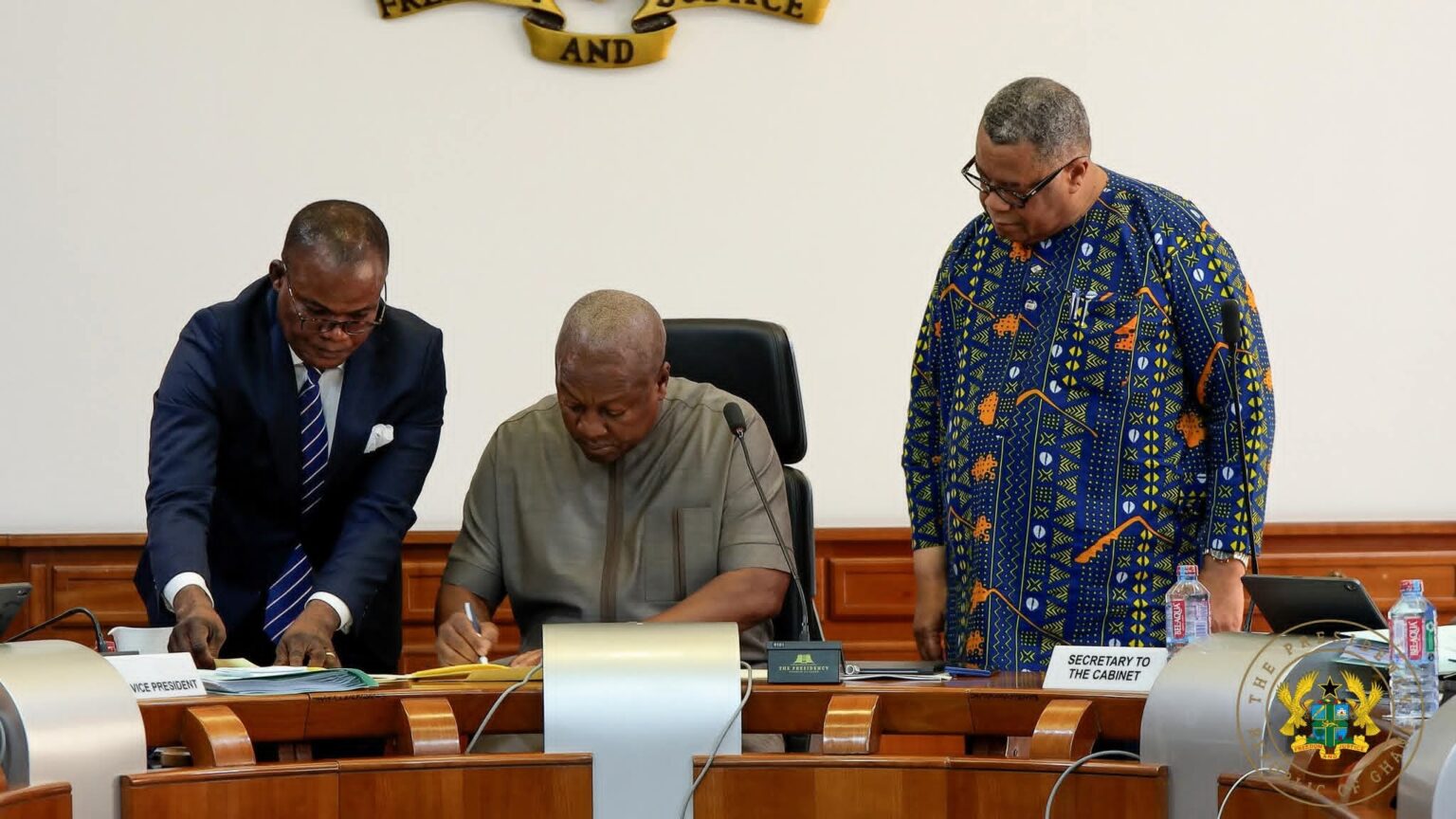
The Bill was signed into law on Wednesday, February 19, 2026, during a ceremony at the Presidency, formally establishing the 24-Hour Economy Authority, the institution responsible for coordinating the implementation of one of the government's flagship economic transformation programmes.
Accra, Ghana – President John Dramani Mahama has officially assented to the 24-Hour Economy Authority Bill, marking a major milestone in Ghana's drive to accelerate industrialisation, improve productivity, attract investment and create sustainable employment opportunities.
Read Also
Government Prioritises Infrastructure and Productive Investment to Accelerate Economic Growth →
The Bill was signed into law on Wednesday, February 19, 2026, during a ceremony at the Presidency, formally establishing the 24-Hour Economy Authority, the institution responsible for coordinating the implementation of one of the government's flagship economic transformation programmes.
The new Authority has been mandated to oversee the planning, coordination, monitoring and implementation of policies that will enable businesses and public institutions to operate beyond the traditional eight-hour workday in sectors where continuous operations are economically viable.
Speaking after signing the Bill into law, President Mahama described the legislation as a defining moment in Ghana's economic development agenda and reaffirmed his administration's commitment to transforming the country's productive capacity.
"I just appended my signature to give assent to the 24-Hour Authority Bill. This Bill, which Ghanaians have been waiting for, is one of our flagship strategies for economic transformation."
According to the President, the passage of the legislation followed extensive consultations and careful legal review to ensure that the Authority is supported by a robust institutional framework capable of delivering long-term economic impact.
He explained that while the vision of a 24-hour economy had generated considerable public interest, successful implementation required more than policy announcements. It demanded strong institutions, effective coordination, and a legal framework capable of bringing together government agencies, the private sector, development partners, and investors under a common implementation strategy.
President Mahama emphasized that the focus must now shift from policy formulation to practical implementation.
"Now we must move from strategy to implementation. The business sector is waiting, Ghanaian investors are waiting, foreign investors are waiting. They want to see the package of incentives that we can afford, so that they can invest more and expand productivity and also create more employment for our young people, and so it's my pleasure to assent to this Bill today."
The establishment of the 24-Hour Economy Authority is expected to strengthen coordination across key sectors of the economy, including energy, transportation, logistics, manufacturing, agriculture, labour, customs administration, digital infrastructure, security, and regulatory services.
By improving institutional collaboration, the Authority aims to remove operational bottlenecks that often limit productivity and increase the cost of doing business.
Government officials believe the initiative will encourage businesses to extend production hours where commercially viable, allowing industries to maximise the utilisation of expensive infrastructure, machinery, and human resources. Increased operating hours are also expected to improve supply chain efficiency, expand exports, reduce production costs, and create thousands of new employment opportunities across multiple sectors.
Industry observers note that the Authority's success will largely depend on its ability to coordinate investment in supporting infrastructure. Reliable electricity supply, improved transport networks, efficient ports, digital government services, adequate security, and skilled human capital will all be critical in enabling businesses to operate around the clock.
The legislation also complements the government's broader industrialisation agenda, which seeks to promote value addition, expand manufacturing, strengthen agribusiness, encourage export-oriented production, and position Ghana as a competitive production and logistics hub within the African Continental Free Trade Area (AfCFTA).
Private sector organisations have generally welcomed the creation of the Authority, describing it as an important step toward improving Ghana's investment climate. Many businesses expect the implementation phase to include targeted incentives such as tax relief, improved access to affordable financing, streamlined regulatory approvals, export support programmes, and investments in industrial infrastructure.
Analysts believe these measures could significantly enhance Ghana's competitiveness, particularly for manufacturers, agro-processors, logistics companies, technology firms, healthcare providers, hospitality businesses and export-oriented enterprises capable of operating multiple production shifts.
The Authority is also expected to work closely with ministries, metropolitan, municipal and district assemblies, development finance institutions, business associations, organised labour and international development partners to ensure that implementation reflects regional economic priorities while supporting inclusive national growth.
As Ghana enters this new phase, attention will increasingly turn to the rollout of detailed implementation guidelines, operational frameworks, and private sector incentive packages that will determine how quickly businesses can take advantage of the opportunities presented under the 24-Hour Economy programme.
With the legal framework now in place, stakeholders across the public and private sectors will be watching closely as the 24-Hour Economy Authority begins its work of translating policy into measurable economic outcomes.
The coming months are expected to define how effectively the initiative can stimulate investment, increase industrial productivity, expand exports, and generate quality employment for Ghanaians, particularly the country's growing youth population.
Disclaimer:
The views expressed on this site are those of the contributors or columnists, and do not necessarily reflect 24HourBusiness.com's position. 24HourBusiness.com will not be responsible or liable for any inaccurate or incorrect statements in the contributions or columns here.
Related Articles
View All →
National News
 National News
 National News
Chairman Wontumi Sentenced to 20 Years in Prison Over Illegal Mining Case
The Accra High Court has sentenced Bernard Antwi-Boasiako, popularly known as Chairman Wontumi, to 20 years' imprisonment after finding him guilty on six criminal charges relating to illegal mining activities on the Samreboi concession in Ghana's Western Region.
Jul 20, 2026
785
 National News
24-Hour Economy on Track to Create 1.7 Million Jobs by 2028 — Goosie Tanoh
24-Hour Economy on Track to Create 1.7 Million Jobs by 2028 — Goosie Tanoh
Jun 22, 2026
465