The partnership establishes a coordinated framework to ensure that fuel stations, bulk storage facilities, refineries, and petroleum transport operations are fully prepared to support continuous economic activity under the government's flagship economic transformation agenda.
Accra, Ghana
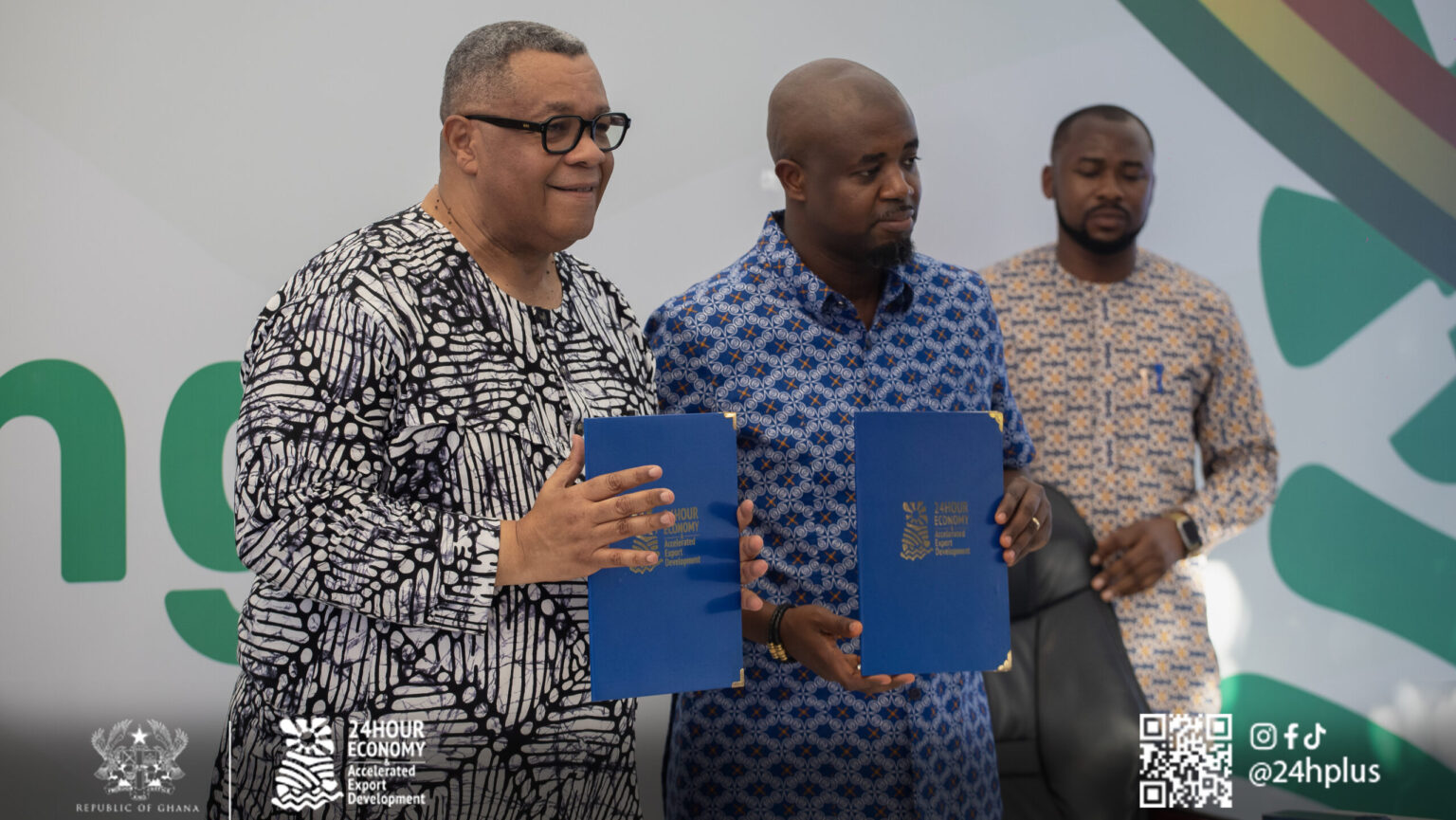
The implementation of Ghana's 24-Hour Economy programme received another major boost as the 24-Hour Economy Authority and the National Petroleum Authority (NPA) signed a Memorandum of Understanding (MoU) aimed at expanding round-the-clock operations across the country's downstream petroleum sector.
The partnership establishes a coordinated framework to ensure that fuel stations, bulk storage facilities, refineries, and petroleum transport operations are fully prepared to support continuous economic activity under the government's flagship economic transformation agenda.
Under the agreement, the NPA will develop and enforce operational readiness standards covering security, lighting, staffing, digital fuel monitoring, and fire safety for certified operators. The 24-Hour Economy Authority will work with security agencies and other government institutions to create an enabling environment that allows businesses to operate safely and efficiently throughout the day and night.
The initiative recognises that a reliable and uninterrupted fuel supply is essential to sustaining manufacturing, agro-processing, transportation, logistics, mining, and other productive sectors expected to benefit from the 24-Hour Economy policy.
Implementation will begin with a nationwide pilot involving about 10 percent of the downstream petroleum sector, with enhanced security arrangements identified as an immediate priority. The NPA has already established a Steering Committee and several technical sub-committees to oversee preparations and coordinate implementation.
The collaboration brings together major stakeholders across the petroleum value chain, including oil marketing companies, bulk oil distributors, transport operators, security agencies, regulators, port authorities, and private sector investors.
Speaking at the signing ceremony, Presidential Adviser on the 24-Hour Economy and Accelerated Export Development, Augustus Goosie Tanoh, said the programme goes beyond extending business hours and is focused on building the productive capacity needed to stimulate sustained economic growth.
The Chief Executive of the National Petroleum Authority, Godwin Kudzo Tameklo, said the agreement aligns the Authority's regulatory mandate with Ghana's broader economic transformation agenda and will ensure that operational standards remain effective while safeguarding workers, consumers, and critical national infrastructure.
The MoU represents another significant milestone in the implementation of the 24-Hour Economy programme and reinforces the critical role of the energy sector in supporting Ghana's industrialisation, investment, and job creation agenda.
 Energy & Power Infrastructure